Kia whakamarumaruhia ai ō tātou ngahere Kauri mō ngā uri whakaheke.
We work together to protect and preserve our Kauri lands for future generations.
Kia ora koutou,
The Tiakina Kauri team and wider Kauri protection community have been busy over the past few months with important mahi, some of which features in this issue. I would also like to acknowledge the weather events that have occurred over the summer months and which are continuing to occur and the impact that this has had on our whānau in the North.
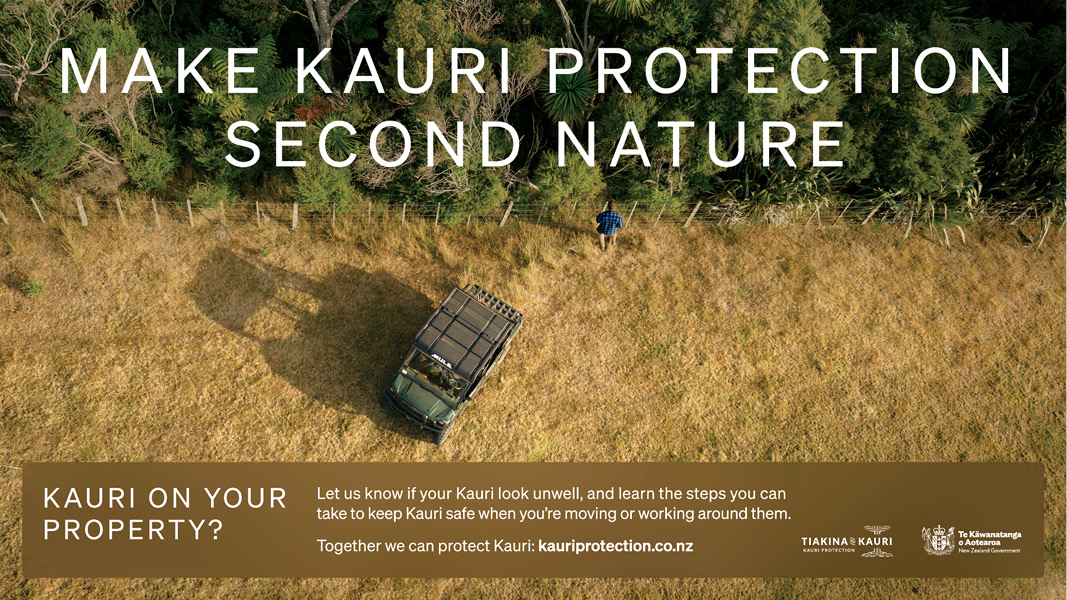
There has been a strong presence of different rōpū across events like Waitangi and Northland Field Days, with the debut of the new Kauri protection engagement trailer (more info below). These events provide a fantastic opportunity for kanohi ki ti kanohi engagement and to hear questions and comments directly from those living and working in Kauri lands. We’ve also had our summer awareness campaign working over this period, delivering the ‘make Kauri protection second nature’ message across digital platforms and some print media. This has now transitioned to targeting industry audiences, including nurseries, farmers and contractors.
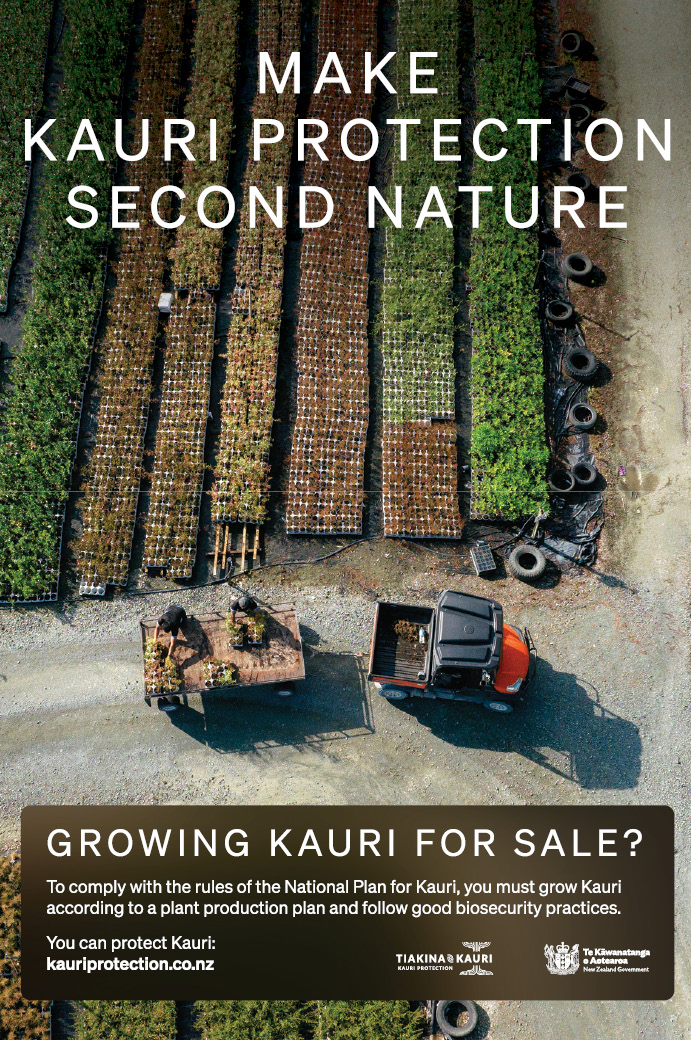
I have recently spent time up in Northland visiting some of our partners, including Te Roroa, mana whenua of Waipoua Forest where Tāne Mahuta lives. I got to witness the significant infrastructure upgrades around Tāne Mahuta as part of the collaborative Rākau Rangatira project. This helps to protect Te Roroa’s important taonga and the forest from the spread of Phytophthora agathidicida (PA) and the pressure from the many thousands of visitors that travel to Northland to visit this iconic tree. Construction for phase two of this project has now begun. Kauri Walks will be closed for approximately 8-10 months, while the Tāne Mahuta walk will remain open throughout the construction period.
The team also toured the new purpose-built lab which will be opening soon. This lab will mean diagnostics for PA can be undertaken on-site, saving time and effort as samples are currently collected and sent via courier to be tested in Hawkes Bay. Tiakina Kauri are working closely with Te Roroa to support them getting this lab up and running. Having facilities like these enables groups on the ground to upskill and respond quickly to the needs and protection of their ngahere.
Our governance group met recently to discuss the year ahead. A big thank you to Alan Cockle for chairing this meeting. During this hui I shared that Thomas Hohaia, governance member representing the Kauri Ora CoLab, has decided to step down from the group. Thomas has been a key member of this group, and I hope you will join me in acknowledging the contribution that he has made and wish him well for the future.
I hope you all have a safe and enjoyable Easter break and enjoy reading this issue. Please share this pānui (newsletter) and encourage others to subscribe. If you have any Kauri protection stories you’d like to share here, please email kauriprotection@mpi.govt.nz
Kauri Ora, Mauri ora.
Mike Hogg, Manager Tiakina Kauri Management Agency
The PA National Pest Management Plan (NPMP) was established in 2022 and is the strongest form of protection under the Biosecurity Act (1993) to help protect Kauri. The NPMP established Tiakina Kauri (which sits within MPI) as a dedicated management agency under the Biosecurity Act (1993), embedding Treaty partnership principles and ten enforceable rules to protect Kauri. The plan was backed by funding of $32 million over five years allocated in Budget 2021.
An independent review was commissioned at the end of 2025 to document progress against the National Pest Management Plan for PA and to inform future activities. It supports Tiakina Kauri, the management agency, and its Governance Group in setting future direction, and may support future investment decisions.
The process involved reviewing programme documentation and consultation (including site visits) with iwi leaders, scientists, government managers, and stakeholders. Thank you to all who participated in interviews as part of this review. A number of recommendations were made that Tiakina Kauri will be working to address with our partners into the future.
The team will be engaging with our partners about the findings of the review, and it will also be publicly available on our website. In the meantime. if you have any questions about this review or you would like to stay informed, please email kauriprotection@mpi.govt.nz
These days we know more about PA and Kauri in Aotearoa New Zealand, but before we better understood this pathogen, there was a sense of of fatalism around Kauri protection. Many struggled to see their place in protecting Kauri or felt like the problem was too big for them to be able to help.
Early research found that virtual reality (VR) and gamification were successful tools for creating behaviour change in environmental education. Recognising this, Waikato Regional Council (WRC) identified the potential of using VR to instil a sense of hope for the future and also promote hygiene protocols and actions which prevent the spread of infected soil.
With funding from Tiakina Kauri alongside their own, WRC led the development of Kauri Pou Kaitiaki – a VR experience, which was rolled out in June 2023.
This experience consists of three separate parts:
1. I te Ōrokohanga “In the beginning” – why we should protect Kauri
This section is about building cultural connection with te ao Māori (the Māori worldview) and educating about the importance of Kauri in the ecosystem. It aims to build connection with the environment through awe.
2. Ā mohoa nei “Here & Now” – the here and now
This section revolves around the behaviour of removing dirt from your shoes and provides the opportunity to practice this real-world action. The gamification of the desired behaviours makes this engaging and fun.
3. Raurangi “Journey into the future”– building hope through a vision of the future
This section leaves the viewer with an emotional view of the future, providing hope and belief of what is possible if we protect Kauri.
Kauri Pou Kaitiaki Teaser
The rich and layered VR experience was possible due to the care put into development, which included working together in person. A mātauranga Māori advisory group and experts in ecology and design all contributed to creating this tool.
Ecologists helped ensure the forest was ecologically genuine, detailed with accurate associated species and creatures such as epiphytes, giant wētā and kōkaha (kauri grass).
The advisory group helped shape an authentic narrative rich in mātauranga and tikanga Māori concepts. In te ao Māori, Kauri and Tohorā (whales) are brothers, so the experience begins under water and then transports you to a mature Kauri forest.
The mātauranga and mahi of Pauline Clarkin (Ngāti Hako), Niketi Toataua (Ngāti Hikairo, Ngāti Maniapoto, Ngāti Paretekawa) and Te Maharanui Mikaere (Ngāti Pukenga ki Manaia) was essential to the end result of Kauri Pou Kaitiaki.
Since the rollout, the VR experience has been widely used across Kauri lands to help people understand how their everyday actions directly contribute to Kauri protection - transforming a complex issue into something personal, practical and achievable. The headsets have now been used across school education programmes, community group engagement, advocacy, events and multi-agency collaboration. They provide a fun way into the Kauri protection conversation, regardless of the organisation using them.
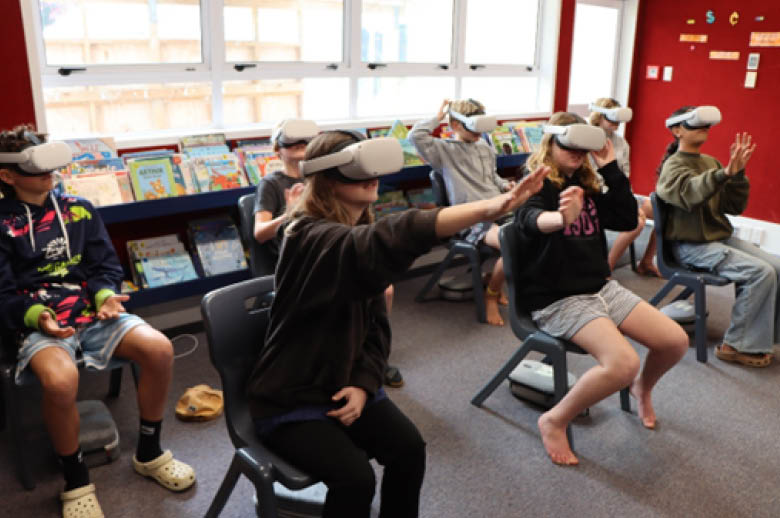
The newest addition to the Kauri protection engagement and education kete was debuted at Waitangi on 6 February.
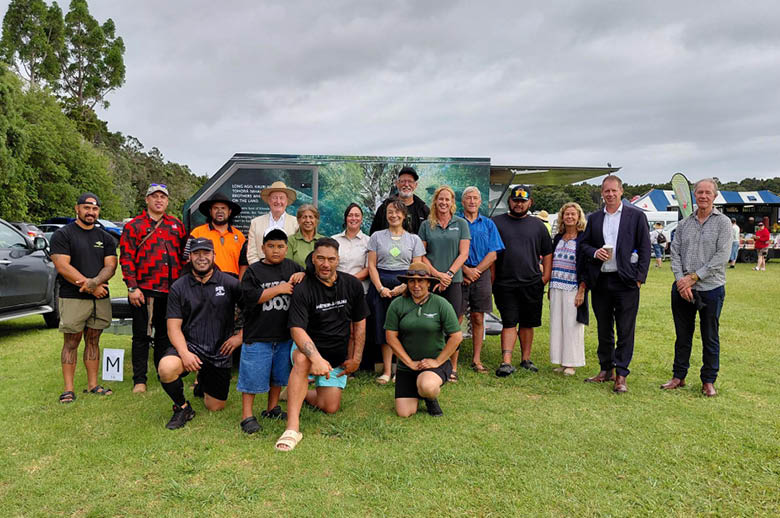
Te Ara Mātauranga o Te Kauri is a new mobile education trailer hitting the road in Te Tai Tokerau. The innovative advocacy and education trailer was developed in partnership between Kauri Ora Iwi CoLab, the Department of Conservation, and Northland Regional Council with support from Tiakina Kauri.
The trailer creation was guided by the whakatauki / vision of the Kauri Ora Iwi CoLab:
E kore te Kauri e tū mokemoke | Our Kauri never stand alone
The forest ecosystem stands with Kauri, as do all hapū, iwi, community, councils and Government. The protection of Kauri and the enhancement of their mauri, in turn enhances the collective wellbeing of those who stand with them.
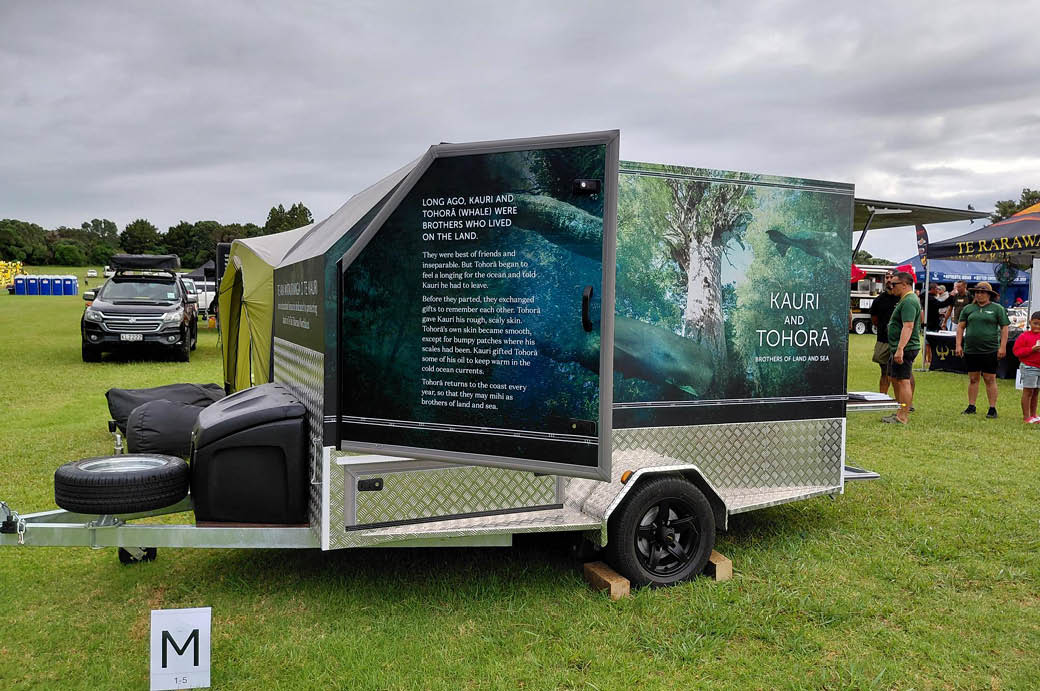
The trailer encourages Kauri protection in a range of fun and engaging ways, including the Kauri VR experience and Kauri bark rubbing. It also features stories from mana whenua, including the relationship between Kauri and Tohorā, brothers of land and sea as told by Ngātiwai.
Te Ara Mātauranga o Te Kauri was inspired by Waikato Regional Council's education trailer, which has been well utilised across Kauri lands and was also created in partnership with Tiakina Kauri. This new trailer reflects a shared commitment to empowering communities and influencing behaviours to ensure Kauri and the ngahere (forest) flourish for generations to come.
Te Ara Mātauranga O Te Kauri is available to visit your kura, school or community event in Te Tai Tokerau / Northland. Please email matauranga@kauriora.org.nz for more information.
Featuring Tāne Mahuta from Waipoua, we acknowledge Te Roroa for allowing the representation of their taonga on Te Ara Mātauranga o Te Kauri.
We also acknowledge the permission to share the Ngātiwai korero of Kauri and Tohorā: Brothers of Land and Sea.
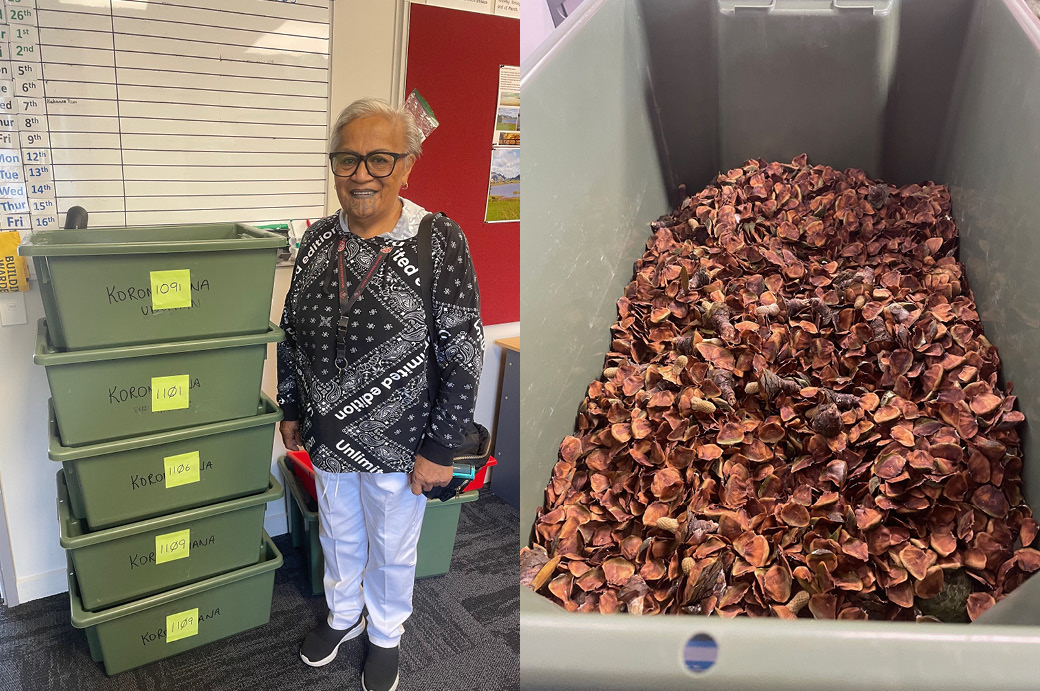
This month, Waahi Whaanui Trust has started on the next step of their Kauri rejuvenation project, beginning the collection of Kauri seed. Funded by Tiakina Kauri, this project will support the establishment a small-scale, fit-for-purpose native plant nursery with a strong emphasis on Kauri ora (wellbeing), protections, biosecurity and long-term environmental restoration and is aligned with their long-term Kauri ora strategy.
So far Waahi Whaanui has been undertaking preliminary research and site visits to similar facilities such as the Te Roroa Nursery in Northland, to identify a scalable, kaupapa-aligned model for a nursery that suits both the site and intended outcomes.
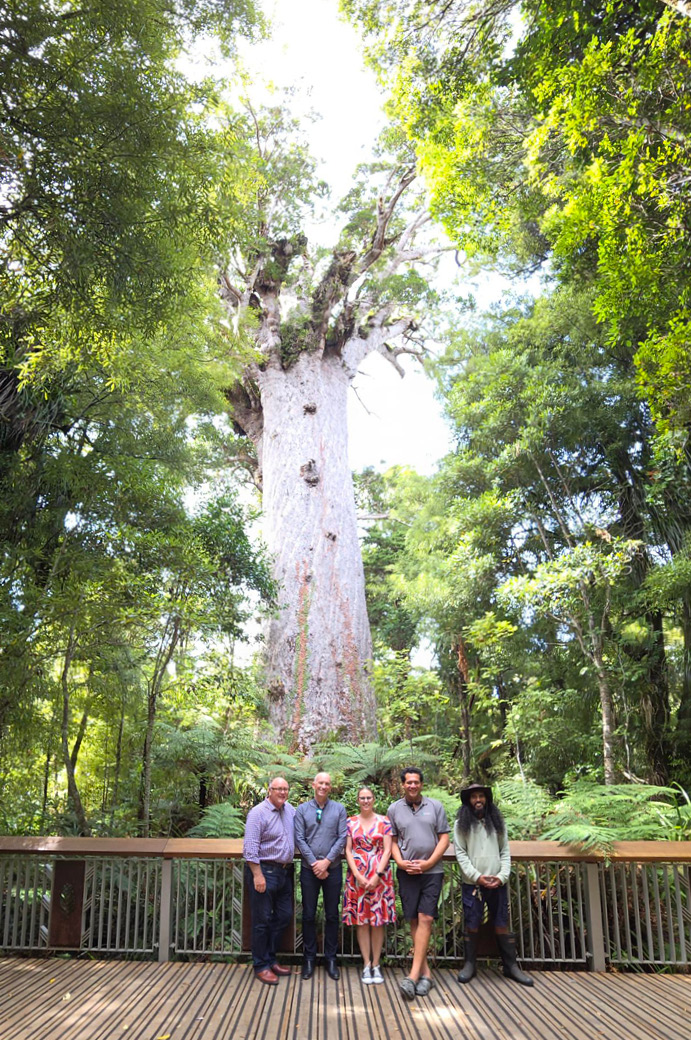
Part of establishing the new nursery has included working with Waikato Regional Council and Plant Pass certification system to ensure that the nursery will comply with the National Pest Management Plan rules around growing Kauri. These rules help ensure good biosecurity practices, reducing the risk of PA being spread through the movement of infected plants. Plant Pass is Aotearoa New Zealand’s nursery production standard for plant health and biosecurity, a voluntary certification scheme that supports nurseries and growers to implement good biosecurity risk management practices.
The project involves ecosourcing (using local seeds) Kauri seeds from within their rohe, propagating these seeds and then repatriating Kauri seedlings out to where they were once found across the Waikato.
Over the last month, representatives from the trust, along with Tiakina Kauri have been out with Fredrik Hjelm from BioSense who assisted the rōpū with the seed collection. It is important that Kauri seeds are not collected from the forest floor as this presents a risk of PA spread. Instead, mature cones can be collected directly from the tree or onto a raised sheet. Alternatively, if there are two people available, a pair of long-handled loppers can be used to cut the cones from the tree, with another person ready to catch the cones in a small net (reminder that you need permission before collecting seed).
Around 20,000 seeds were collected as part of this mahi. A wonderful volunteer from Waahi Whaanui has come onboard after hearing about the kaupapa, offering to help with the care of the seedlings.
A key part of Kauri protection is building our understanding of where PA is present across Kauri lands. Having this information means that appropriate mitigations can be put in place by land managers, including closing or upgrading tracks, phosphite treatments and animal control.
Kauri trees can present with PA-like symptoms for a variety of other reasons. Trees bleed to cover wounds, and leaves can yellow and drop due to other pressures such as drought. These symptoms can be confirmed to caused by PA by soil sampling. This is done by taking a sample of soil and roots near Kauri and sending it to a lab for testing. These are either a morphological test (looking to see if something physically looks like PA in the sample) or a molecular test (looking for DNA matches to PA in the soil).
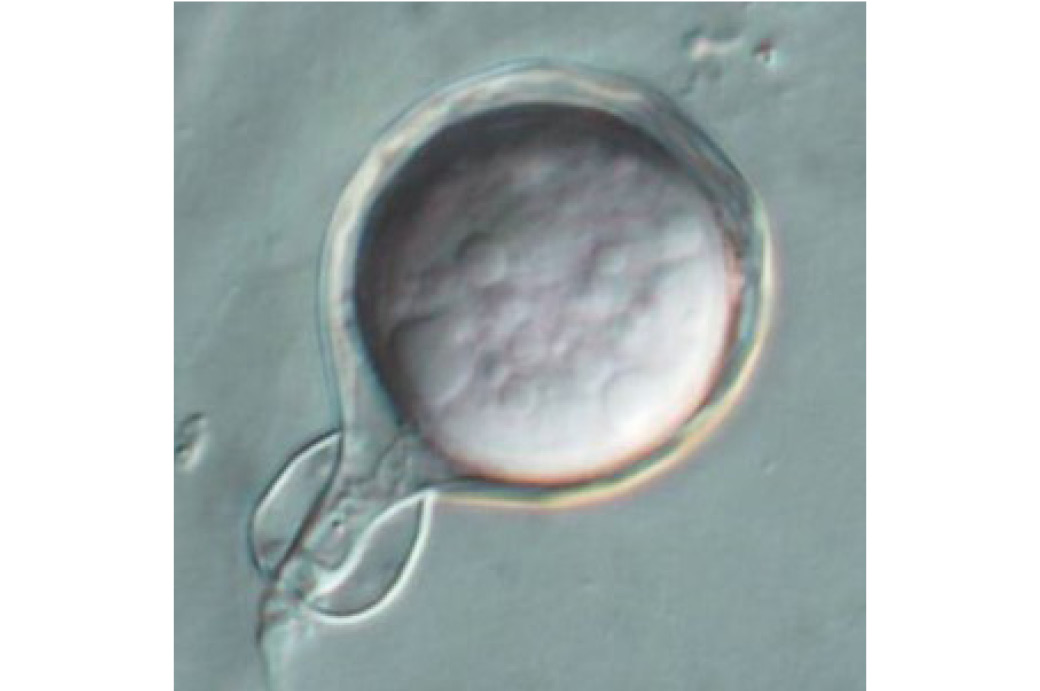
There are three diagnostic tests available that can be used to detect PA, all of which rely on the life stage of ‘the oospore’ of PA to germinate in the soil samples and infect a piece of bait plant material. An oospore is a ‘resting’ spore and is the life stage of PA spread via soil. These spores are released into the soil as an infected tree’s roots decay.
One of these three tests is an existing polymerase chain reaction (PCR) test which has recently been approved for use in detecting PA. This test has previously been used to confirm other tests’ results but has never been used as a primary surveillance tool. This approval process means that this test has been through our standardised processes and we can be sure that its results are accurate and reliable. Having this PCR test approved and available allows for more labs to be able to undertake PA diagnostic testing, which increases the resilience of the wider Kauri protection system.
The approval document is now live on our website.
As we work together to protect Kauri, we are also protecting the species that call them home. Over their full life of 500–2,000 years, these trees become a kāinga (home) and a habitat to a variety of special animals, plants and fungi. We look forward to featuring these species over the coming newsletters.
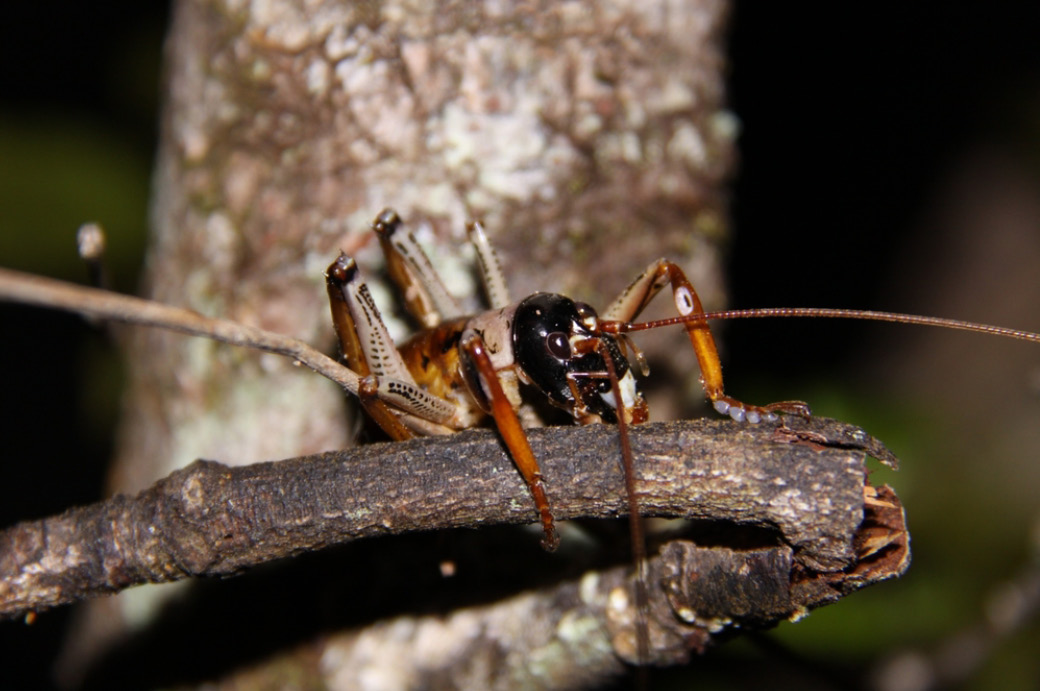
There are more than 100 species of wētā that live in Aotearoa New Zealand. There are five broad types of wētā: tree wētā, ground wētā, cave wētā, giant wētā and tusked wētā. The Auckland tree wētā is one of these species which can be found at home in the Kauri tree. This species can be differentiated by their pinkish, white body plate that sits behind their head and is found north of the Manawatū Gorge.
These wētā live in hollows in trees and often move in after other insects (like pūriri moth larvae) have finished with their tunnels. They are important in the ecosystem as they break down plant material and provide a food source for other species in the ngahere (forest). You might even have some wētā in your backyard! You can learn how to make a wētā hotel on the Department of Conservation website.