Kia whakamarumaruhia ai ō tātou ngahere Kauri mō ngā uri whakaheke.
We work together to protect and preserve our Kauri lands for future generations.
Mānawatia a Matariki! As we approach Matariki (the Māori New Year), it is a good time to stop and reflect on all that has been achieved in the Kauri protection programme this year.
As I mentioned in our last newsletter, an independent review was commissioned at the end of 2025 to document progress against the National Pest Management Plan (NPMP) for Phytophthora agathidicida (PA) and to inform future activities. This review confirms the NPMP and Tiakina Kauri have been successful and that continued investment in Kauri protection is a high impact, cost effective way to protect this iconic taonga species and deliver long term national benefits. The review makes 17 recommendations, and the Tiakina Kauri team are incorporating these into longer-term planning and is engaging directly with key stakeholders on the findings. The review is now live on our website and can be read here.
The latest of our best practice guides are also now up on our website and include subjects such as pruning Kauri, event management around Kauri and growing Kauri in nurseries. If you would like the print files for any of these guides for your mahi, please email kauriprotection@mpi.govt.nz.
June marks the end of the time-limited government funding that was assigned for the NPMP in 2021. Biosecurity New Zealand are exploring funding options for the coming year, and I will update you in this space in the next newsletter. Tiakina Kauri will continue to support the wider system through system leadership and coordination, technical and operational support, ongoing public awareness, guidance and best practice tools to enable our programme partners.
It has been positive to see groups sourcing funding through other avenues as well, such as the Kauri Ora Iwi CoLab and Foundation North (more info below).
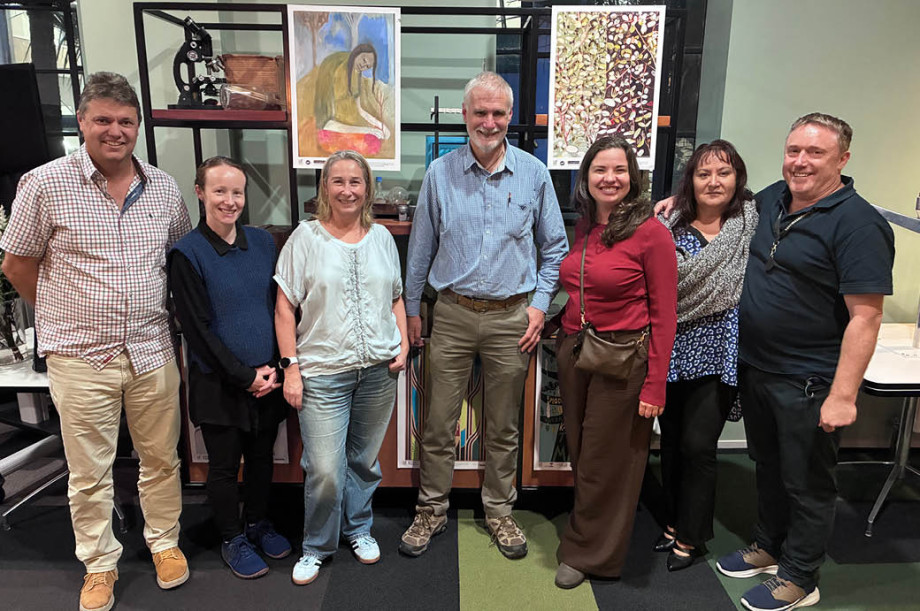
I would also like to acknowledge the retirement of a tohunga in the Kauri protection programme, Ian Horner. Ian is retiring from the Bioeconomy Science Institute (BSI) but will still be involved in the kaupapa as he is being given an honorary fellowship at BSI and continuing his mahi with Kauri Rescue. He has contributed greatly to the knowledge around PA and Kauri protection, including leading research on the use of phosphite. Phosphite is a treatment which slows the spread of PA within infected trees and the ngahere (forest).
Want to know what phosphite treatment looks like in the field? Check out this video by Pest Free Kaipātiki as they go out with Auckland Council and Kauri Rescue to treat some Kauri trees.
I hope you all have a relaxing Matariki and enjoy reading this issue. Please share this and encourage others to subscribe. If you have any Kauri protection stories you would like to share here, please email kauriprotection@mpi.govt.nz
Kauri Ora, Mauri ora.
Mike Hogg, Manager Tiakina Kauri Management Agency

New Zealand’s southernmost Kauri forest has been confirmed as free of the PA pathogen.
This confirmation comes after the completion of a survey which consisted of more than 1,686 hours (70 full days) collecting data across more than 20,000 hectares. This was carried out by kaimahi (workers) from the Department of Conservation (DOC) and the Kaimai Mamaku Restoration Project (including Ngāti Hako, Ngāti Tumutumu, Ngāti Hinerangi, Ngāti te Wai, and Ngamanawa Incorporation).
The survey assessed the presence or absence of PA in the soil, and established baseline Kauri health to inform ongoing protection, treatment, and forest health strategies.
DOC Regional Lead Kauri Protection Tracy Mezger coordinated the extensive survey effort and says it’s a relief to have confidence PA is absent from the forest.
“Our worst fear was it was already here and we’d be playing catch-up to protect these beautiful trees from the devastating impacts of PA. But the level of sampling done means we’re very confident it’s not there – and we’re committed to keeping it that way.”
Tracy says the survey was co-designed with iwi and hapū with their aspirations at the heart.
“Iwi kaimahi were empowered to take an active role in all aspects of the work, from tikanga and planning, all the way to biosecurity protocols and taking samples. It was true collaboration and learning for all of us,” says Tracy.
Tim Aoake, General Manager of Wairere Mahi, the conservation arm of Ngāti Hinerangi, says the job has just started.
“Doing this work felt like we were re-tracing the steps of our tūpuna. We were learning more about the significance of our mahi in the taiao, and how Kauri contribute to the care and protection of our ngahere and wai.
“And now we know we have Kauri free from PA, the question we ask is ‘how do we protect them?’.
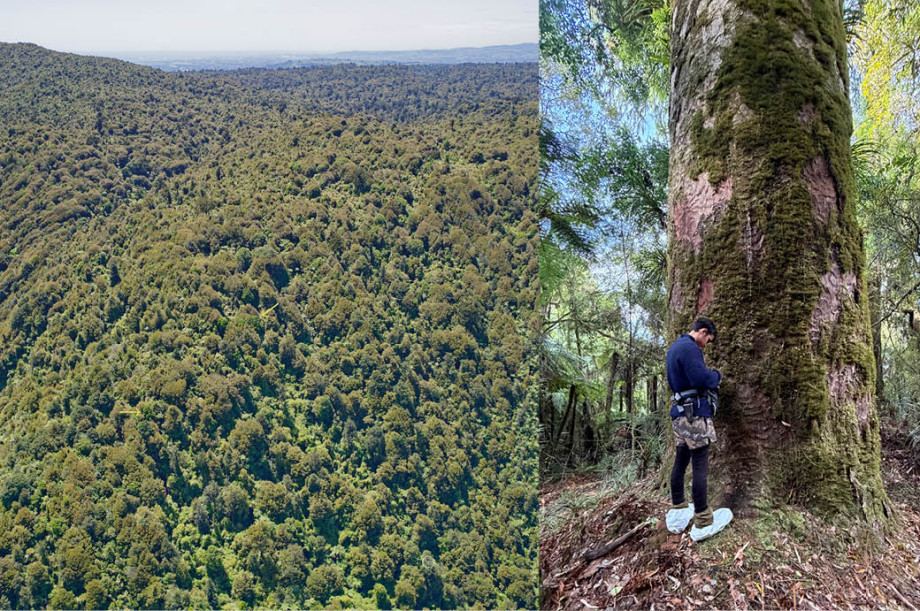
Tiakina Kauri funding purchased aerial imagery which helped to establish the Kauri population for this survey, and the tool Kete Aronui was also used to aid this survey. Kete Aronui is a national GIS platform that supports collaboration across organisations involved in the Tiakina Kauri programme by standardising data and providing a secure way for groups to manage and view their data. Tiakina Kauri provides overall strategic direction, Land Information New Zealand manages the system, and partners shape its development through their needs and experiences.
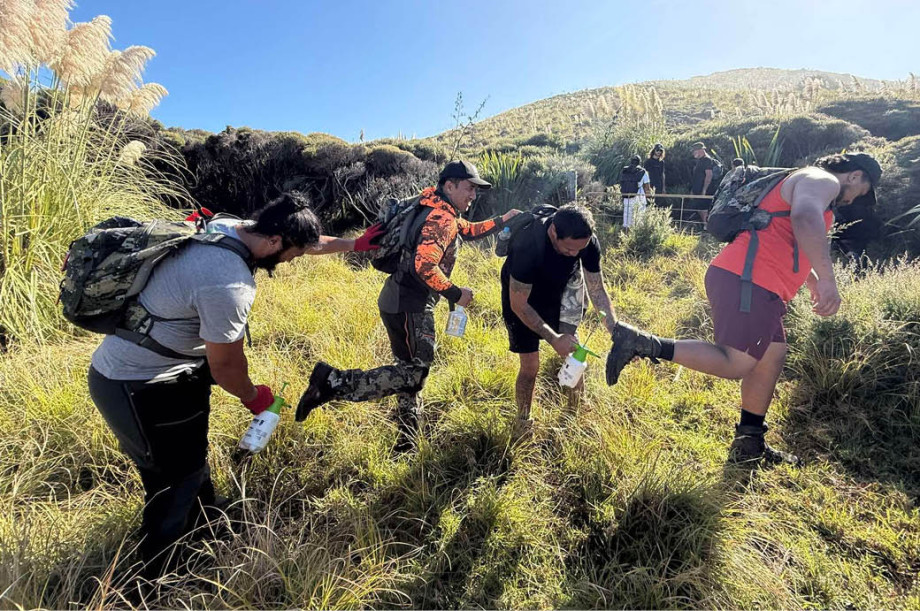
To help protect Kauri and keep these areas PA free, visitors heading out to the Kaimai (or anywhere with Kauri) need to remove all visible soil from boots or shoes when they enter and exit, use all hygiene stations, and stick to the tracks.
Read more about the news on the Department of Conservation Website.
Foundation North has approved $1,249,170 in funding for the Kauri Ora Iwi CoLab, a unique collaboration of four iwi. The grant covers Kauri protection operations for four Kauri Ora ranger teams working across Te Tai Tokerau/Northland from 1 July 2026 to 30 June 2027.
Founded in 2018, the Kauri Ora Iwi CoLab is a Te Tai Tokerau iwi collaboration between Ngāti Kurī Iwi Trust, Te Runanga o Te Rarawa, Ngātiwai Trust Board and Te Roroa Commercial Development Company. The CoLab has woven together the strengths of the four iwi to build the first mana whenua led collaboration – an iwi-led partnership to safeguard Kauri and regenerate their ngahere (forest). They play a key role in protecting Kauri and implementing the National PA Pest Management Plan and their collective rohe encompasses 60% of Te Tai Tokerau’s remaining Kauri forests. The CoLab exists to ensure the survival of Kauri through iwi-led biosecurity, governance, and operational excellence, integrating science with mātauranga Māori.
The CoLab established the first full-time, Te Tai Tokerau iwi-led Kauri Ora ranger workforce, a landmark achievement supported through Jobs for Nature funding from 2020 to 2023 and Tiakina Kauri funding from 2023 to 2026. Ranger teams operate through each iwi’s own structures, aligned to iwi aspirations, rangatiratanga, and mana motuhake, while supporting coordinated delivery of the National Pest Management Plan for Kauri protection.
“The CoLab’s whakataukī / vision is ‘E kore te kauri e tū mokemoke’ - ‘Our Kauri never stand alone,’ says Debbie Martin, spokesperson for the CoLab.
"The Foundation North funding comes at a critical moment. The time-limited funding received by the Ministry of Primary Industries in 2021 to support the implementation of the National Pest Management Plan for the protection of Kauri concludes in June 2026. Without this intervention from Foundation North, the CoLab faced the real prospect of losing its workforce, its institutional knowledge, and years of hard-won momentum in protecting one of Aotearoa’s most taonga species.”
“This funding is a strong endorsement of the mahi the teams are doing on the ground and gives them the bridge they need to keep our rangers in the field while we secure longer-term investment for Kauri.”
Tiakina Kauri was formed in 2021 to invest in key Kauri protection activities and implement a National Pest Management Plan with partners, collaborating agencies and territorial local authorities to help protect Kauri from PA. Tiakina Kauri promotes the health and protection of Kauri, and this is represented in the language that replaces references to ‘kauri dieback’ that was used in the previous Kauri Dieback programme. Tiakina Kauri is phasing out the use of the word ‘dieback’ as part of a commitment to tangata whenua to shift the Kauri Protection programme’s focus from Kauri sickness to Kauri ‘ora’ (health), to reflect a more holistic approach to Kauri health and well-being.
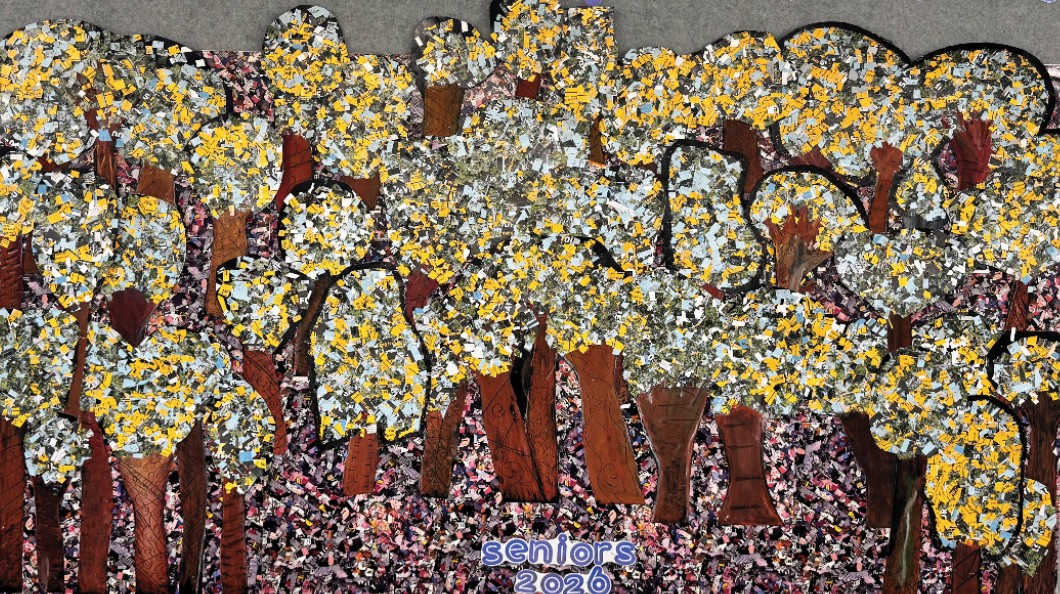
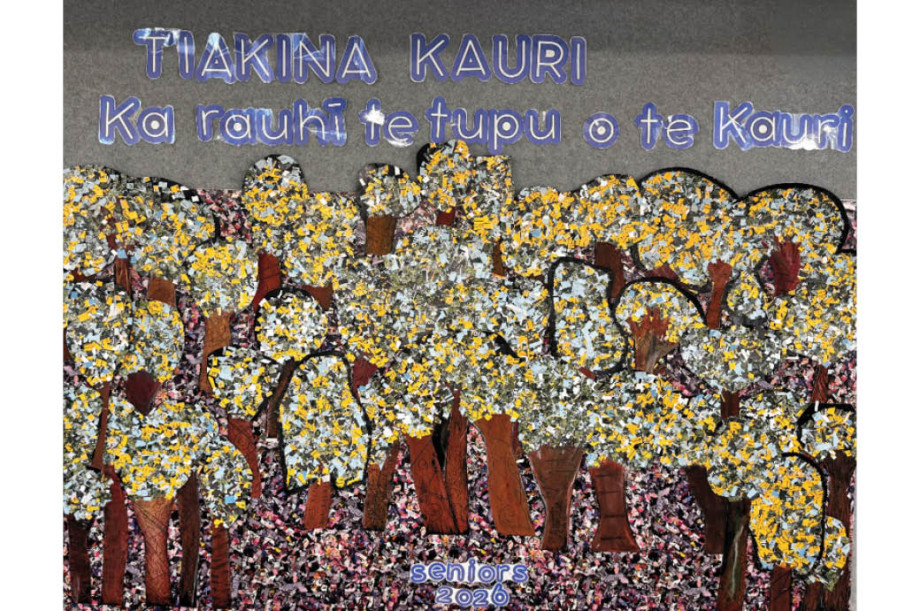
Old ‘dieback’ posters and flyers got a new life this past term through Birdwood School’s Kauri themed art project for Toi ki te Paka (Art in the Park). Toi ki te Paka is an art exhibition created by West Auckland kura (schools) alongside iwi, Te Kawerau ā Maki and Auckland Parks. The year five and six class at Birdwood School were learning about Kauri protection and decided on an art project to encourage and inspire others to look after Kauri.
The class repurposed old ‘dieback’ flyers and posters from the previous programme for the leaves of their Kauri trees and used their arms as guides for trunks and hands as branches to create Kauri trees. The class wanted to highlight the beauty of Kauri and raise awareness of the devastation caused by PA.
They cut purple and pink pieces from magazines which were cut up and carefully glued into the background. The purple represents the new posters promoting Kauri protection.
Pictures of the Kauri forest and other Kauri artwork will be on display for Toi ki te Pāka this Matariki.
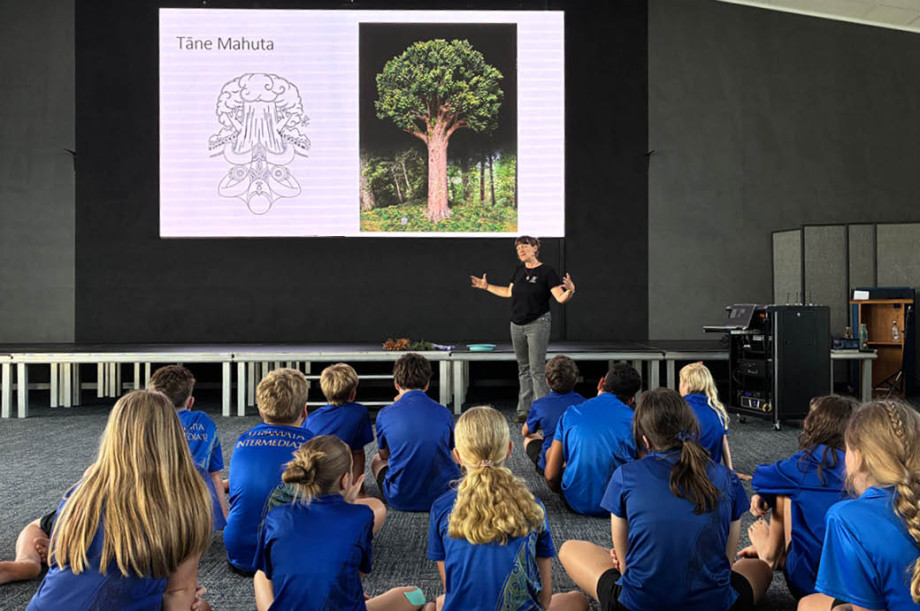
Waikato Regional Council’s (WRC) Kauri education team spent a week at Matamata Intermediate School earlier this year, reaching all 14 classes and around 400 students with a Kauri protection experience.
Each class received a 90-minute session including a briefing and practical activities.
Students learnt about the importance of Kauri, key facts about the tree, and how they can do their bit to protect this taonga of the forest.
The Waikato region has over 94,000 hectares of Kauri forest, of which more than 20,000 hectares is old growth. The Matamata area is home to a number of planted Kauri, including in the town centre and along town streets. Southern Kauri are vital to the future of Kauri in New Zealand as this population is predominantly free from PA.
Classes rotated through three sets of activities which build on what they initially were taught in the session, including the Kauri virtual reality experience and understanding the importance of cleaning footwear and gear to stop the movement of dirt from around Kauri to protect from PA infection.
The Kauri education programme helps students form a meaningful connection with Kauri says Alana Howat, WRC’s Biosecurity Coordinator – Kauri Protection.
“Through hands on experiences seeing, touching, and learning about these ancient giants, students discover what makes Kauri so special and why they need our protection,” says Alana.
Tiakina Kauri funding has supported the WRC Enviroschools partnership. This includes providing facilitator support to deliver the Kauri education programme in partnership with Enviroschools. The programme focuses on Kauri protection and biosecurity awareness and, to date, has reached 34 schools and their students from Year 2-12 to date across the Waikato region.
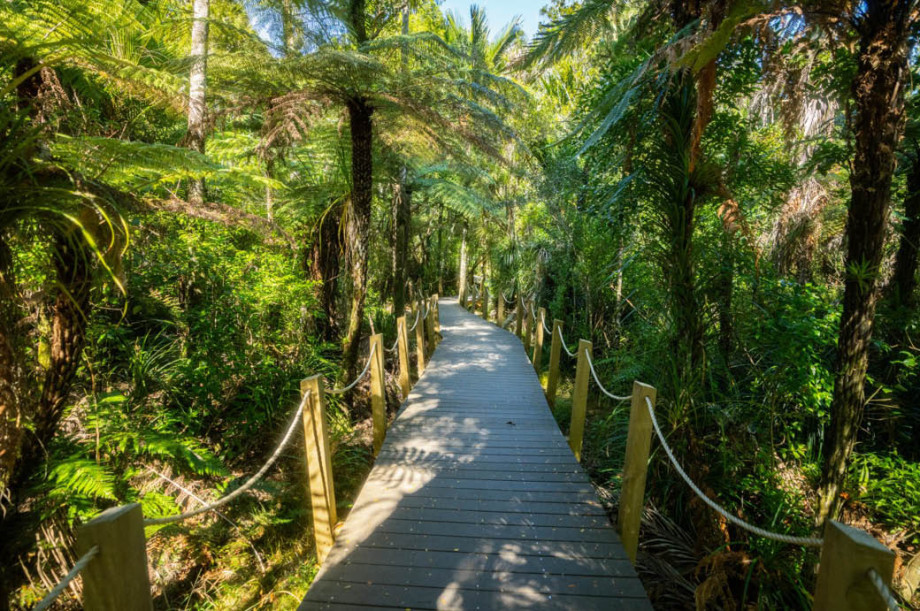
After a few years of essential closures to protect Kauri from the spread of PA, three tracks in the Waitākere Ranges Regional Park have reopened. These are the Zion Hill Track, Kuataika Track and Smyth Ridge Track. Thanks to Kauri protection upgrades, these trails can now be enjoyed while keeping the iconic taonga trees safe.
These experiences offer the perfect chance to reconnect with the majestic ngahere (forest), marvel at the vibrant native birdlife, and be challenged with long-distance walks.
Remember to protect Kauri by staying on the tracks and by using any hygiene stations you encounter to remove any soil or organic material. This is Rule Nine of the National Pest Management Plan.
The survival of Kauri depends on all of us taking action to stop PA from spreading. Using these stations and provided cleaning equipment is essential in helping ensure that no infected soil comes in or out of the forest.
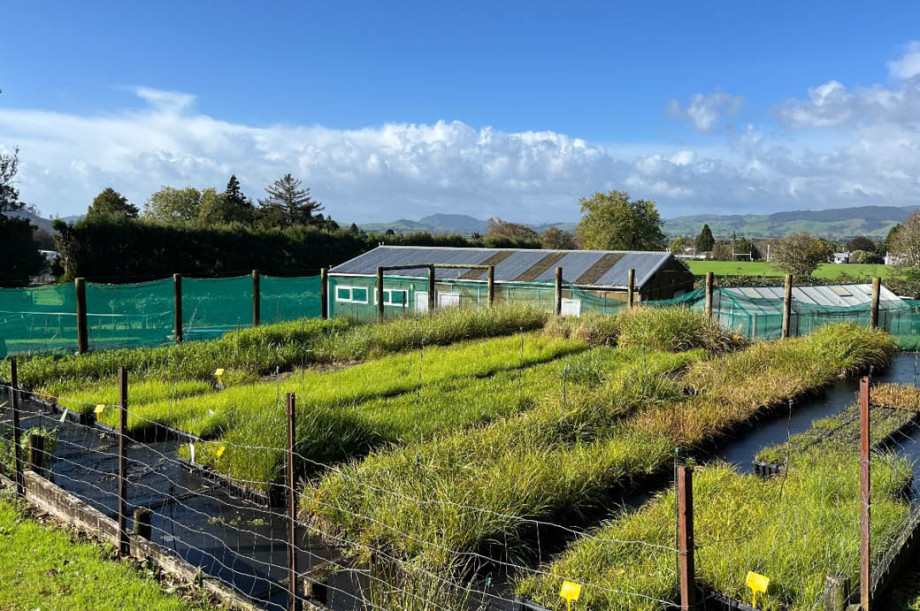
Since committing to stronger plant health and biosecurity practices, a small Waihi nursery is not only looking and operating smarter but also seeing increased pride among its staff.
Waihi Native Plants is one of nine Waikato nurseries working towards Plant Pass certification, which means it’s actively transitioning from informal practices to a formal, independently verified biosecurity system.
Plant Pass is an industry-led plant biosecurity certification programme supported by Waikato Regional Council, a major plant buyer and planter. It is Aotearoa’s voluntary certification scheme for plant producers, designed to reduce the spread of pests, weeds and plant diseases through plant supply chains.
The certification process requires plant producers to carefully consider how plants, people, vehicles and equipment move through their operation, and how biosecurity risks are managed at each step. Plant producers play an important role in protecting Kauri as nurseries provide ideal conditions for Phytophthora development. If PA was introduced to a nursery, it could rapidly spread through young Kauri crops, and in turn, into Kauri forests, restoration areas, and home gardens as infected plants are shipped from nurseries.
Plant Pass includes an additional Kauri module to ensure that nurseries growing Kauri have robust biosecurity practices in place to reduce the risk of spreading PA. Under Rule Three of the National Pest Management Plan, nurseries must have a Kauri Plant Production Plan if they intend to move Kauri trees grown from August 2022 off-site, due to the high risk of spreading PA. This plan includes how nurseries can prevent the pathogen from spreading within and beyond their premises, as well as how Kauri seeds are sourced and what growing media is used. By completing the Kauri module of Plant Pass, nurseries automatically comply with Rule Three.
Waihi Native Plants operations manager Warren Coffey says becoming Plant Pass certified is important both personally and professionally.
“It sounds like stuff we should have been doing, and we were – but more in an ad hoc way. Now it’s streamlined and we have proper structures in place. It all looks so much better, and once we are certified, it will improve our outlook even more.
“It will allow our customers to visually see the biosecurity measures we have implemented – they can be confident they are receiving plants that are not compromised by plant pathogens.”
If you are interested in becoming Plant Pass certified, learn more here.
Biosecurity New Zealand is seeking nominations for a Community Member to join the Tiakina Kauri Governance Group, providing strategic oversight of the national programme to protect Kauri and implement the National PA Pest Management Plan (NPMP).
This is a unique opportunity to ensure community perspectives help shape decisions that protect Kauri forests and the cultural, environmental, and economic values they support.
As we work together to protect Kauri, we are also protecting the species that call them home. Over their full life of 500–2,000 years, these trees become a kāinga (home) and a habitat to a variety of special animals, plants and fungi. We look forward to featuring these species over the coming newsletters.
In May, Coromind Magazine spoke to DOC Kauri Protection Lead Tracy Mezger about how Kauri are part of a much bigger network in the ngahere.
“Of the 189 fungi species found in Kauri forests, 12 exist nowhere else on Earth. An amazing example of teamwork in nature,” Tracy says.
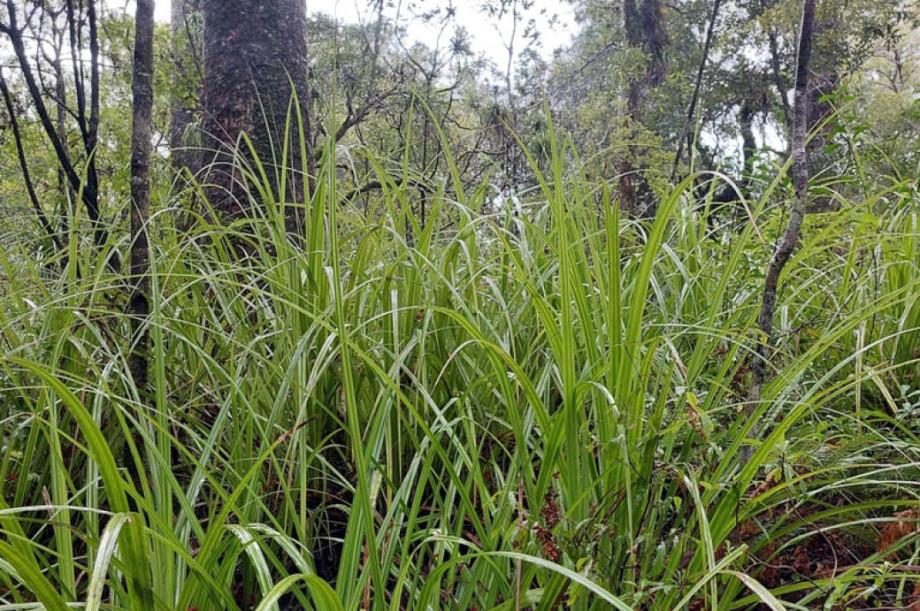
Kauri influence soil, water and climate over centuries. Their fallen leaves, rich in tannins, change soils and create specialised habitats where certain plants thrive. One of these is kōkaha, or kauri grass, which grows on the ground and in Kauri canopies. These reach more than two metres in height and provide shelter for insects and berries for birds.
“Even the tiny plants have fascinating stories,” Tracy says. Delicate kauri orchids use clever traps to ensure pollination, proving that in Kauri forests, nature is always working in wonderfully unexpected ways.