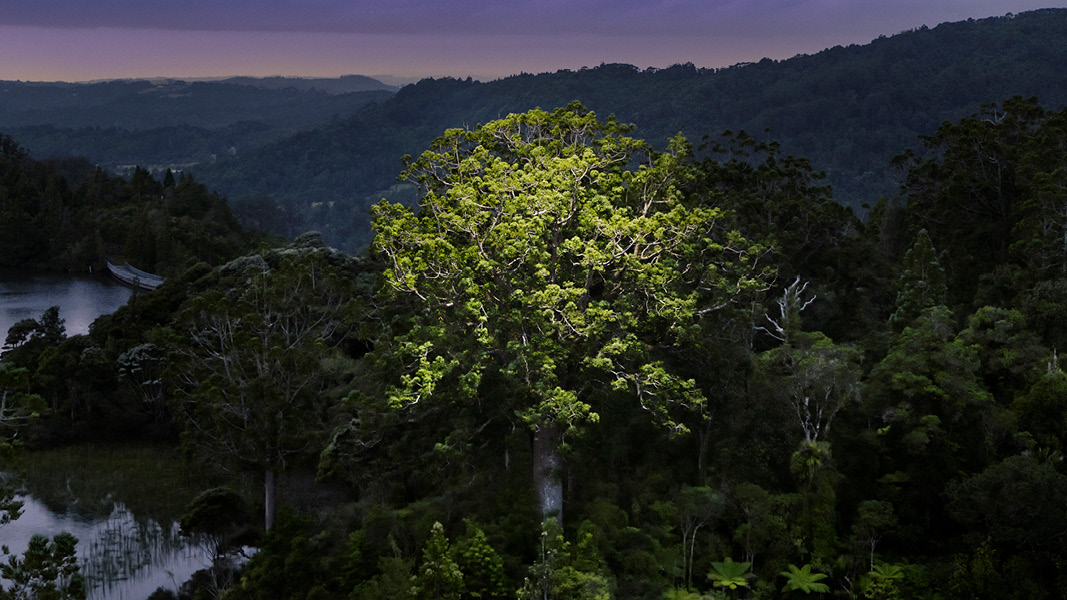
Kauri are threatened by an introduced soil-borne pathogen called Phytophthora agathidicida (PA). Ensuring the survival of Kauri for future generations depends on all of us taking actions and doing everything we can to stop the PA pathogen from spreading.
To enable cohesive and effective Kauri protection, a PA National Pest Management Plan (NPMP) came into effect in August 2022. A NPMP is the strongest form of protection available under the Biosecurity Act 1993.
The NPMP established Tiakina Kauri as a dedicated management agency under the Biosecurity Act 1993, embedding Treaty partnership principles and creating enforceable rules to protect Kauri. It was backed by funding of $32 million over five years allocated in Budget 2021.
An independent review was commissioned by Biosecurity New Zealand and carried out at the end of 2025 to document progress against the NPMP for PA and inform future activities. Andrew Harrison, Principal Consultant at AHC Limited, undertook this review. He has 20 years of experience working in both technical and senior management roles across government (Department of Conservation, Biosecurity New Zealand) and industry, and in this capacity led the establishment of the 2009 kauri dieback multi-agency response.
The review confirmed the NPMP and Tiakina Kauri have been successful and that continued investment in Kauri protection is a high‑impact, cost‑effective way to protect this iconic taonga and deliver long‑term national benefits.
It found the NPMP and Tiakina Kauri have delivered substantial progress in strengthening governance, embedding Treaty partnership principles, and implementing practical measures to protect Kauri. Public awareness has increased significantly, iwi-led capability has grown, and tools provide a strong foundation for success.
The review makes 17 recommendations for the future of the programme. Tiakina Kauri are taking the recommendations of the review and working these into longer-term planning. We are directly engaging with key stakeholders around the findings and acknowledge continued success will require willing participation and coordination across Tiakina Kauri, mana whenua, Department of Conservation, councils, and key community organisations.
You can read the review here or below.