Kia whakamarumaruhia ai ō tātou ngahere Kauri mō ngā uri whakaheke.
We work together to protect and preserve our Kauri lands for future generations.
Kia ora koutou,
Welcome to the December Kauri Kōrero! This is my first update since joining Biosecurity New Zealand as manager of the Tiakina Kauri management agency. As you will know, this follows the well-deserved retirement of Alan McKenzie in October. I was lucky enough to join the team and our Governance group in acknowledging Alan's contribution and farewelling him recently in Warkworth.
Some of you will know of me already as part of the wider Kauri protection community, as I have been the manager of the Te Papa Atawhai Department of Conservation’s (DOC) Plant Pathogens team for the last three years.
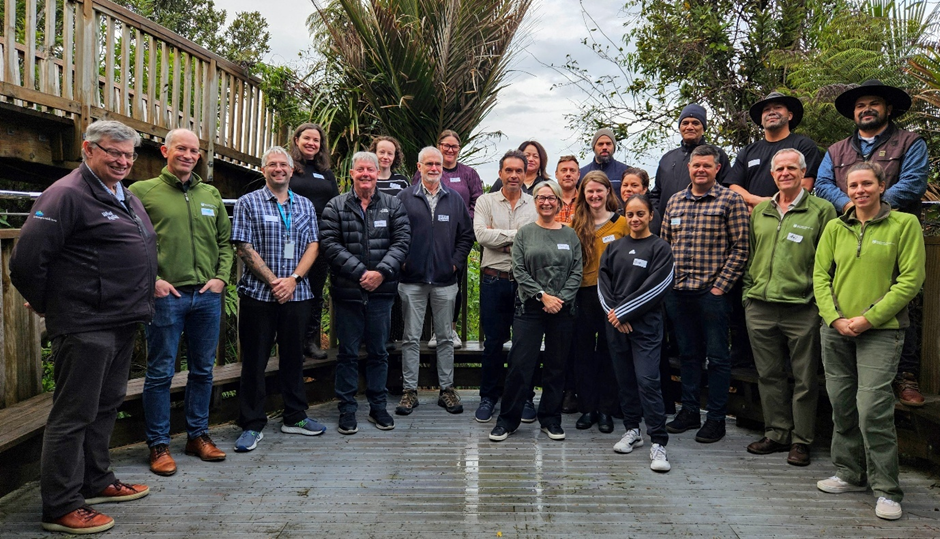
Mike (second to right) at a Kauri protection workshop in August.
I feel privileged to be in this position and to be able to lead Tiakina Kauri in continuing the Kauri protection journey as the national system moves into a new phase. Being based in Tāmaki-makau-rau, I am excited to get out and about across Kauri lands over the coming months, to engage with you on the opportunities and challenges in front of us. I hope you are all enjoying the wind down into the summer break and are planning to spend some time out in nature and with Kauri during these summer months. If you are, remember to make Kauri protection second nature when visiting these taonga (treasures). You might also see some advertising over the summer period from our awareness campaign with the below messages and information for forest users on how they can protect Kauri.
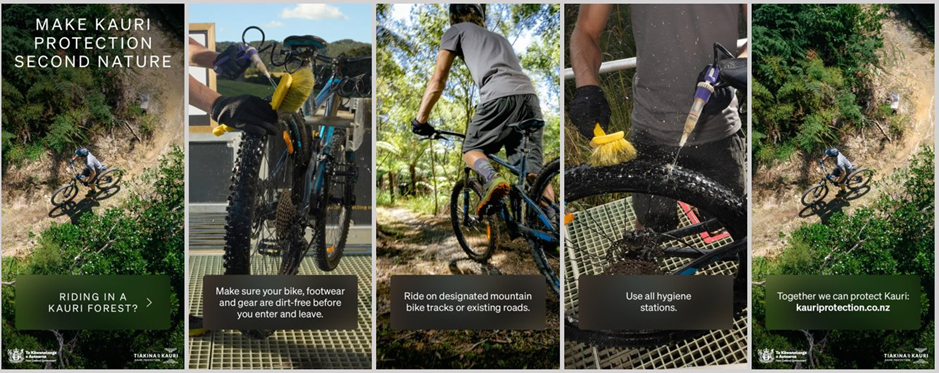
If you’d like to learn more, we have a variety of guides on our website that can help and also provide information about how the National Pest Management Plan might apply to you and your activities around Kauri.
I hope you enjoy reading this issue. Please share this pānui and encourage others to subscribe. If you have any Kauri protection stories you’d like to share here, please email kauriprotection@mpi.govt.nz.
Wishing you all a safe and restful break.
Ngā mihi,
Mike Hogg, Manager Tiakina Kauri Management Agency
In the early 2000s, Kauri were observed to be dying in the Waitākere Ranges. Authorities were alerted and an investigation commenced. Over the last 20 years, research has taught us a lot about the pathogen Phytophthora agathidicida (PA), which is causing this disease. This knowledge has helped inform management and mitigate the impact of this pathogen. It has also provided hope in our ability to protect Kauri.
Initially though, PA was a new pest species that brought a whole bunch of questions with it. What was causing these symptoms? Was it in all of Kauri lands? Were there ways to treat the trees?
What was causing Kauri to become sick and were other species at risk?
We now know that Phytophthora agathidicida is what is causing disease in Kauri. Phytophthora (which translates as ‘plant destroyer’) are pathogens that cause a range of diseases in plants. There are hundreds of species across the world. These species are diverse, and some Phytophthora species will only infect certain plants, while others aren’t picky in what they’ll infect. For example, in Australia Phytophthora cinnamomi poses a significant threat to the local environment due to its generalist nature.
While PA is a significant threat to the taonga species Kauri, one advantage we have in stopping PA spread is that it doesn’t impact other native species in the ngahere (forest) in the same devastating way.
Management is also made easier because we know that PA is the only Phytophthora species having this impact on Kauri in the ngahere.
A study in 2014 investigated the impacts of four Phytophthora species on Kauri. The results of this suggested that while PA is a very aggressive pathogen to Kauri, the others had a much weaker effect on the plants.
Understanding what is causing this disease and knowing it is restricted to one pathogen and one host plant makes management much more achievable.
Is PA in all of Kauri lands?
There has been extensive surveillance and monitoring across Kauri lands since the discovery of PA in 2006. This surveillance has been strengthened by Tiakina Kauri investing in training people and creating a collection of tools to help groups on the ground survey and care for their ngahere in a scientifically robust way.
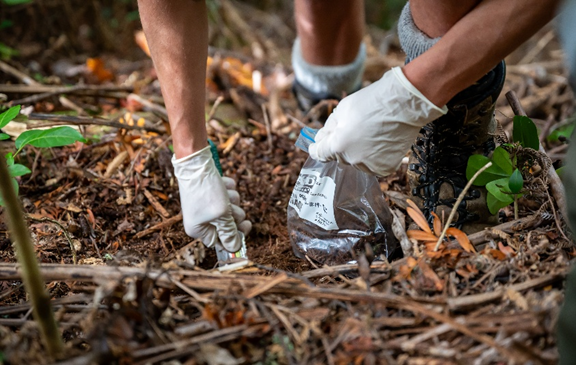
The result of this mahi (work) is that we are building a clearer idea of where PA is and isn’t in Aotearoa New Zealand. This knowledge is vital as PA is spread via soil movement, so PA-free Kauri stands are at risk if infected soil is brought into the area. Without soil movement via people, animals and vehicles, the spread of PA is naturally very slow. This gives us valuable time to continue looking into solutions. That’s why it is so important that we all take action to stop the PA pathogen from spreading.
Are there ways to slow the spread?
While there is still no cure for PA infected trees, we have learnt a lot about slowing the spread of PA in and around infected trees. Research has highlighted the effectiveness of phosphite treatments for improving tree health, reducing the amount of PA in the tree and the soil and only needing treatment every few years.
Treating trees with phosphite can also be used as a preventative barrier to protect trees of significance. Just like how you spread bacteria and viruses when you sneeze or cough, sick trees shed more PA back into the environment. If the trees around them are treated and are at lower risk of contracting or spreading PA, then this reduces the risk of these trees getting sick without having to treat them. While we have a good understanding of the dose of phosphite needed in younger trees, it is still an unknown with the large mature trees, although recent research is close to finding the answers.
Science shows that managing the risk of PA movement through actions such as good hygiene in the ngahere, staying away from Kauri roots and on the tracks and reducing soil movement are vital ways to keep these trees safe.
If you are interested in learning more about what science has shown about Kauri and PA, we have recently published 10 key facts in collaboration with Auckland Council and the Department of Conservation.
Bioprotection Aotearoa has also recently shared a podcast about the early days of Kauri protection hosted by Professor Amanda Black, Professor Peter Dearden and Dr Nick Waipara.
“As long as there are people that care, there is hope.” – Professor Amanda Black
The Kauri Ora Iwi CoLab (Kauri Ora) is a Te Tai Tokerau iwi collaboration between Ngāti Kurī Iwi Trust, Te Runanga o Te Rarawa, Ngātiwai Trust Board and Te Roroa Commercial Development Company. Programme manager Debbie Martin shares more about the CoLab:
“The Kauri Ora Iwi CoLab has woven together the strengths of our four iwi to build the first mana whenua led collaboration – an iwi-led partnership to safeguard Kauri and regenerate our ngahere (forest).
Mana whenua iwi have been active in Kauri protection, utilising our own resources for many years, and more recently with Crown support under the Jobs for Nature programme (2021-2023), and Tiakina Kauri (2023-2026).
We have grown ranger teams within each iwi, established partnerships, and built capability across our iwi, whānau and hapū – all in support of our taonga species – Kauri.
Our vision statement / whakataukī:
This whakataukī is inclusive in the broadest sense.
The forest ecosystem stands with Kauri, as do all hapū, iwi and community. The protection of Kauri and the enhancement of their mauri, in turn enhances the collective wellbeing of all who stand with them.
Unchecked, disease caused by PA would devastate Kauri forests, and consequently the wellbeing of the ngahere and its people. We are all connected.
Our purpose is to provide leadership, relationships, and transformative practices in Te Taiao to benefit (protect, restore, and revitalise) Kauri and its whānau.
We play a key role in protecting Kauri as part of implementation of the National Pest Management Plan for PA. Soil sampling and tree health assessments are only a part of our protection strategy.
We look forwards to sharing more about our mahi (work) and vision and introducing you to our Iwi Kauri Ora Ranger team in future newsletters."
Want to know more? Check out the Kauri Ora Facebook and Instagram.
Monitoring tree health and testing for Phytophthora agathidicida (PA) is important to gain a national understanding on where PA is within Aotearoa New Zealand and also understand how Kauri health is in general.
Part of this mahi (work) involves groups heading into the ngahere (forest) to take samples of soil around Kauri trees. These are then sent to a lab to test for any signs of PA. If you’ve ever been tramping, you’ll know that walking off track is no easy task. These groups can spend hours getting to trees which have been mapped based on imagery taken from above. So, you can imagine how devastating it would be to get to the tree to realise the technology has gotten it wrong and you’re standing in front of a rimu or tānekaha instead.
This is a result of mapping inaccuracy, and unfortunately, some areas are just harder to map. Human eyes remain one of our best tools for distinguishing Kauri trees from imagery.
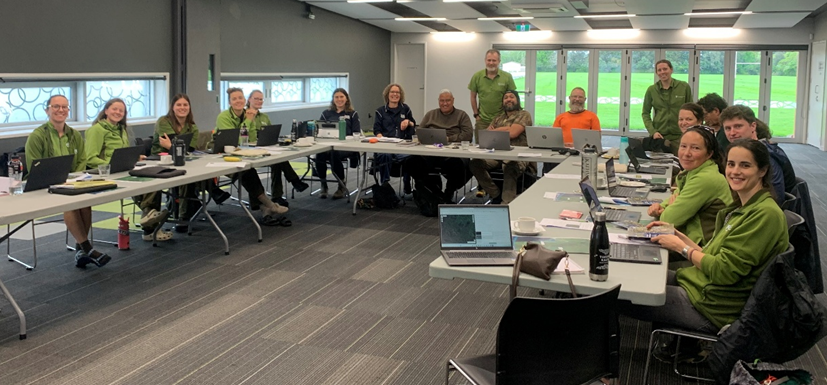
To help groups learn how to verify Kauri trees from maps before heading into the field, the Te Papa Atawhai Department of Conservation hosted a hui (meeting) in Te Aroha in October. The aim of this was to address these mapping challenges and to try improving the process of confirming whether a tree is Kauri, before heading into the ngahere.
Toitū Te Whenua Land Information New Zealand has built a tool within the Kauri database Kete Aronui, which shows various layers of aerial imagery. Groups can use this imagery to check the trees they want to sample before heading into the field to ensure they are Kauri. Field crews in Kaimai are piloting these to help ensure these systems work well for those people on the ground. Once they’ve trialled this, we will incorporate their feedback and adjust the tool to ensure it works for those working in the ngahere.
A big thank you to Kathryn O’Toole for sharing her expertise and to the Waikato GIS team for extensive Kauri mapping, advancing NPMP objectives, and identifying Kauri trees.
The Hillary Outdoors Marine & Conservation Centre, a new marine and conservation outdoors centre set amongst 340 hectares of regenerating native forest in the Coromandel, opened earlier this year. It includes a brand-new hygiene station designed to protect Kauri in the surrounding forest.
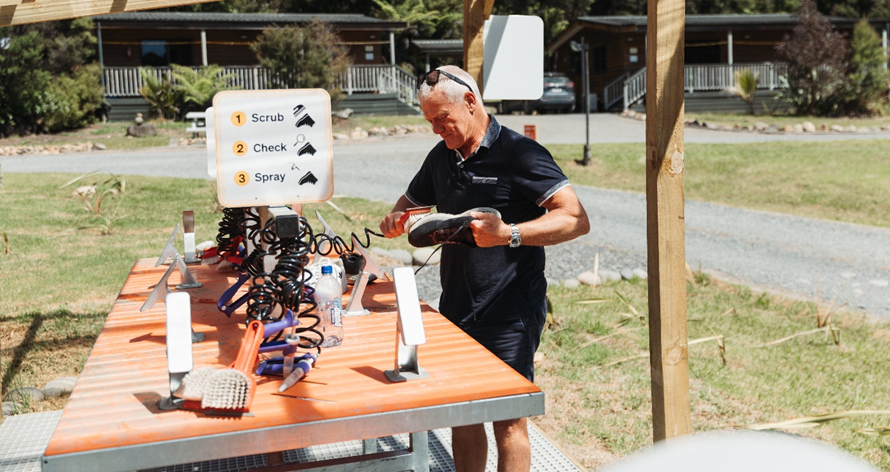
Hillary Outdoors Chairman, David Tommas using new hygiene station.
This new design stems from the need for multiple people to carry out hygiene at a time. With more than 2,500 attendees annually, the centre immerses students in hands-on learning experiences covering various marine and land-based activities and conservation efforts.
Waikato Regional Council (WRC) provided advice and expertise on the centre’s biosecurity protocols, which are essential to protecting Kauri. This includes two hygiene stations, designed specifically to meet the needs of the centre. These were co-designed with Hillary management to accommodate 8-10 people at a time while ensuring that everyone can clean all the dirt off multiple pairs of shoes, and any walking equipment, such as tramping poles.
The station is located at the entrance, so cleaning their gear is the first thing that visitors do when they arrive. WRC also provided biosecurity training for centre staff, made educational materials, including award-winning Kauri protection virtual reality sets, available and provided Kauri artwork to help decorate the centre.
These tools provided by WRC mean that not only are Kauri protected but rangatahi (young people) are provided with the opportunity to engage with and learn about Kauri protection and conservation. Kauri are the third longest living conifer in the world, and so it is essential that the message of Kauri protection is passed down to younger generations.
As we work together to protect Kauri, we are also protecting the species that call them home. Over their full life of 500–2,000 years, these trees become a kāinga (home) and a habitat to a variety of special animals, plants and fungi. We look forward to featuring these species over the coming newsletters.
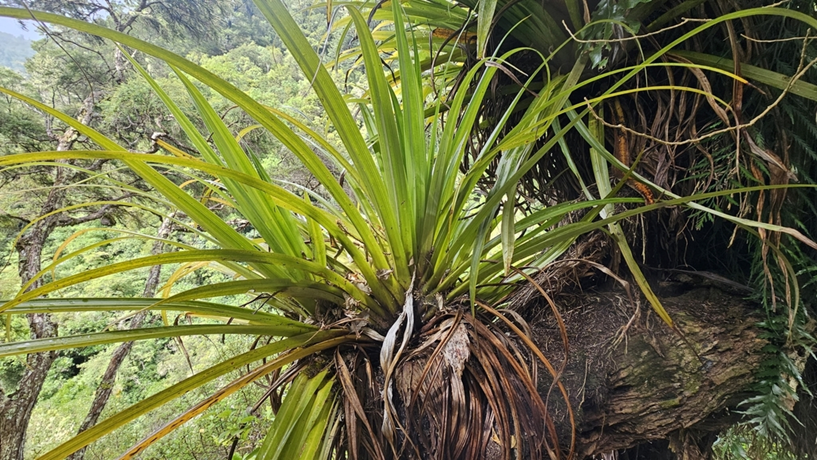
Kahakaha is an epiphytic plant, which means that it grows on other plants, high up in the canopy. They are only found in New Zealand and require warmth, moisture and a tall tree to grow in to get good light. These trees provide food and habitat for other native species, including one of our native mosquitos which only breed in pools of water that collect in the plant.
The angle where a branch joins the trunk of the Kauri tree provides a place for kahakaha and other epiphytes to grow. Because Kauri take so long to grow, they have evolved to have flaky bark which stops epiphytes hanging on and smothering them over their long life.