Kia whakamarumaruhia ai ō tātou ngahere Kauri mō ngā uri whakaheke.
We work together to protect and preserve our Kauri lands for future generations.
Welcome to the September issue of the Kauri Kōrero.
The days are starting to get longer again, and groups are beginning to plan their surveillance for the dry season. We’ve had some exciting developments in the surveillance space which you can read about below, including the approval of a new diagnostic test and an international award for our GIS platform, Kete Aronui.
In late August, the Tiakina Kauri operations team hosted a discussion with John Beachman, a former NZ Forest Service manager with extensive knowledge of Kauri history and management. The session helped operational kaimahi (staff) in Te Tai Tokerau better understand historic Kauri logging activities and the large-scale soil movement involved. This knowledge supports current PA risk assessments, as areas where logging occurred may face a higher risk of disease spread due to past soil disturbance and movement.
Our quarterly Governance Group hui was held in early September where we welcomed the appointment of Snow Tane as the new Kauri Ora Iwi CoLab representative on the group. Snow retired from his role as the general manager of Te Roroa Development Group in 2025 and we are very thankful to have him on board in this capacity. The minutes for the Governance Group hui can be found on our website.
Please share this pānui and encourage others to subscribe. If you have any Kauri protection stories you would like to share here, please email kauriprotection@mpi.govt.nz
Kauri ora, Mauri ora.
Mike Hogg, Manager Tiakina Kauri Management Agency

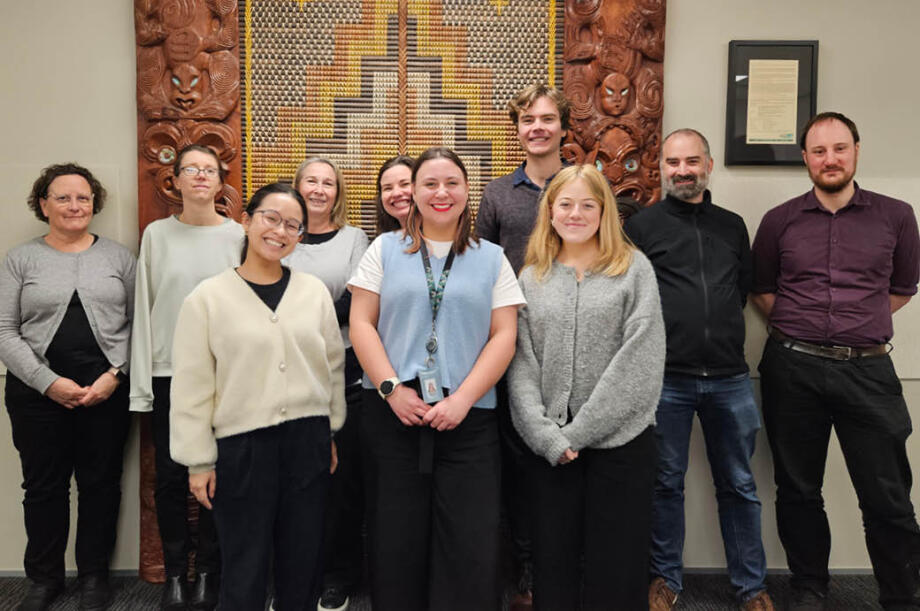
A new diagnostic test developed at Te Herenga Waka - Victoria University of Wellington has been approved for use for national Phytophthora agathidicida (PA) surveillance. The oDNA test is simple, quick and affordable, making it an accessible test for those across Kauri lands.
The test was developed by a research team consisting of Associate Professor Monica Gerth (who led the development of the test), Jade Palmer and Emily Hocking.

When a Kauri is infected by PA, the roots die back and the pathogen releases oospores into the soil - tough, long-lived survival spores that can persist for years and spread the disease further.
The new test, known as the oDNA (oospore DNA) test, isolates these oospores directly from soil samples, rather than requiring the pathogen to be grown in a laboratory first, as current methods do.
To ensure confidence in the test’s performance and support its use across the Kauri protection programme, Tiakina Kauri commissioned an independent review involving international experts and testing across multiple laboratories using blinded soil samples. The independent testing confirmed the test correctly identified known soil samples containing PA, with no false positives.
Alongside this formal review, the test was also stress-tested in the field. Earlier versions of the test were prototyped and refined by the university team in partnership with Northland iwi, Te Roroa. Their Kauri Ora team tested these prototypes, with the shared goal of having a version robust enough for the Te Roroa team to run themselves in their own lab, putting advanced diagnostic capability into the hands of mana whenua.
The test approval aligns with the objectives of the National PA Pest Management Plan, including reducing the spread and impact of PA and maintaining areas that remain free of the pathogen.
To date, PA has not been detected in all Kauri forests, and protecting these areas depends on all of us taking action to prevent its spread. The new test will strengthen these efforts.
If you are a lab who would like to offer this test, please email Tiakina Kauri Science Lead, Stephanie Tomscha (Stephanie.Tomscha@mpi.govt.nz). If you are interested in using this test for your surveillance, please contact Stephanie Tomscha or Monica Gerth (monica.gerth@vuw.ac.nz).
Kete Aronui, a data system that enables Kauri protection, received a Special Achievement in GIS (SAG) award in the Environment and Natural Resources category at the Esri User Conference in San Diego in July. The platform is delivered by Toitū Te Whenua Land Information New Zealand (LINZ) on behalf of Tiakina Kauri.
Kete Aronui was officially launched in 2024 and since then, the platform has evolved in collaboration with mana whenua and other programme partners to ensure it meets the needs of their surveillance programmes. Kete Aronui now delivers a broad range of tools and services for surveillance groups that support their Kauri protection efforts, including surveillance, risk mapping and soil sampling.
A key objective of the National PA Pest Management Plan involves building knowledge of Kauri population distribution and PA pathogen spread. Kete Aronui enables consistent and high-quality collection, management and visualisation of Kauri data so we can manage PA at a national level and improve protection decisions.
Receiving the Special Achievement in GIS Award is a significant acknowledgement of the innovation, technical expertise, and commitment demonstrated by the LINZ team. The award also recognises the strong partnership-driven approach that has underpinned the platform’s development, with Tiakina Kauri and the wider Kauri community playing a vital role in shaping its success.
Eagle Technology nominated LINZ and Kete Aronui for the award. Eagle Technology’s CEO, Graeme Henderson, says the award highlights the powerful impact of geospatial technology in addressing critical real world environmental challenges.
“This successful collaboration between LINZ, MPI, and their partner agencies demonstrates how innovation and data-driven insights can support the protection of Aotearoa New Zealand’s natural taonga. We are delighted to see this important work acknowledged on the global stage.”
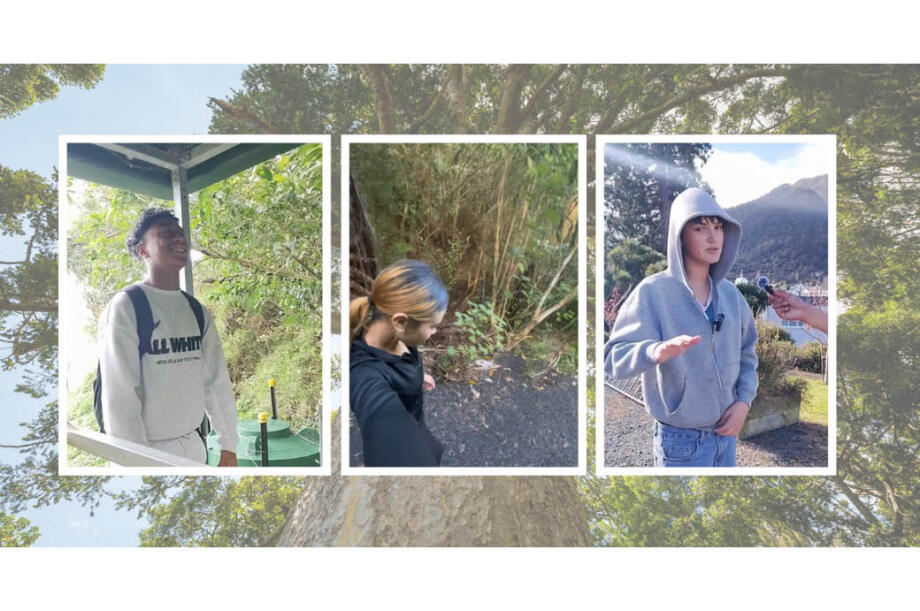
Ngāti Tumutumu rangatahi have been getting creative, putting their own spin on the important kaupapa of protecting Kauri from PA.
With support from Tiakina Kauri, Tumutumu Kauri Ora and Ngāti Tumutumu Trust teamed up with marketing agency Original Geek to give rangatahi the chance to learn more about Kauri protection, while also picking up some new skills in creating content for social media.
After learning about the kaupapa, each rangatahi created their own video about Kauri protection. While the key messages are the same, each rangatahi brought their own ideas, personality and style to how they shared the message.
“This was a great opportunity for our rangatahi to work alongside the team at Original Geek, to learn from people working in the marketing industry and to put those skills into practice while sharing an important kaupapa,” says Ngāti Tumutumu Trust Kaiwhakahaere, Jill Taylor.
“We’re really grateful to Tiakina Kauri for supporting this kaupapa and giving our rangatahi the opportunity to learn, get creative and be part of the wider mahi to protect Kauri.”
The videos are being shared on the Tumutumu Kauri Ora Facebook page. Head over, check them out and tautoko the rangatahi and their mahi!
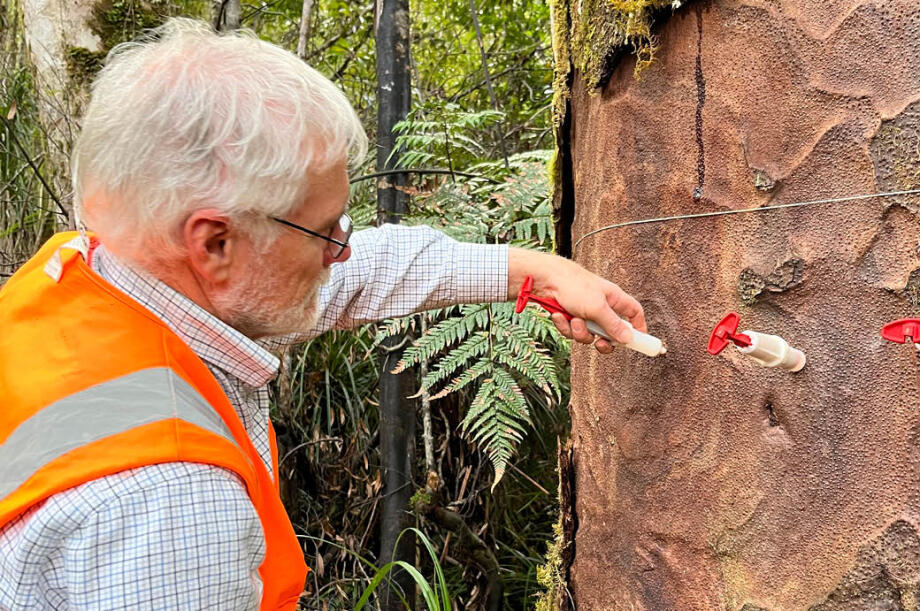
It’s human nature to want to help protect Kauri, believes Dr Ian Horner.
A leading plant pathologist in Aotearoa New Zealand, Ian helped set up the citizen science project Kauri Rescue, which uses science and community action to help protect Kauri trees from PA.
Kauri Rescue is a not-for-profit, which operates mainly in the Auckland region and surrounding areas where PA has been detected. They also work closely with Tiakina Kauri, including using recent funding to help expand their mahi into the Northland and Waikato regions.
PA was first recognised as a serious threat in 2006, after dying mature Kauri were discovered in northern New Zealand forests.
“Before we knew the cause we were wandering around the Waitākere and Waipoua, wondering why these trees were dying,” says Ian, who worked for Plant & Food Research at the time and quickly became involved in investigating the problem.
“When you go into a Kauri forest and stand next to these magnificent trees, it is awe-inspiring. To see them fallen around you, it’s impossible not to be moved by that.
“It’s human nature to want to do something to help. It’s become a passion more than a job.”
Now largely volunteer-driven, Kauri Rescue brings together scientists and landowners to protect Kauri on private property. To date, the trust has helped safeguard more than 5,000 trees across more than 200 properties.
But Ian is clear that treatment is not the answer to preventing the spread of PA.
“The key is getting the soil off your boots,” he says.
“The PA pathogen lives in the soil, so if you move dirt, you move the disease. Good hygiene is the most effective way to protect Kauri forests. Don’t turn up with dirty boots. You need to turn up with boots you could eat your dinner off. And if you leave a forest with dirt on your boots, take them off and scrub them clean before you wear them anywhere else.”
Learn more about Kauri Rescue and Ian's work with phosphite treatment.
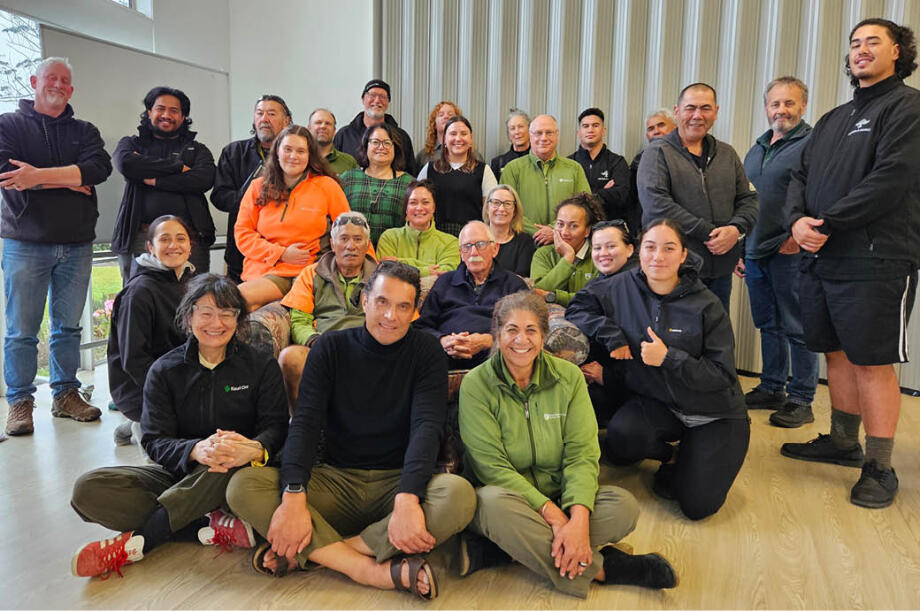
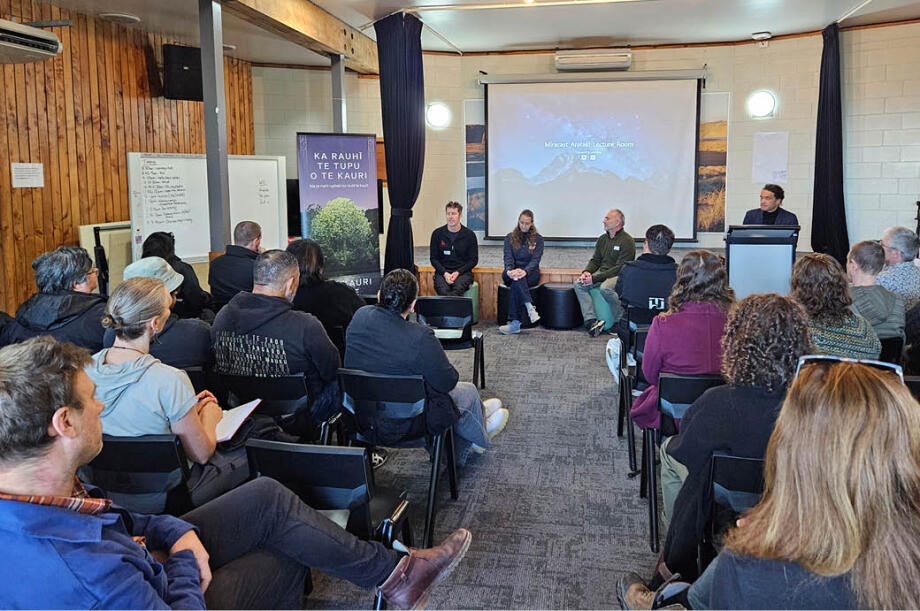
Te Kawerau ā Maki, Auckland Council and Tiakina Kauri hosted the Auckland Kauri protection hui in August at the Arataki Visitor Centre in the Waitākere Ranges.
A rōpū from across Kauri protection attended, and the event allowed reflection of the lessons learned from past and current practices, the opportunity to celebrate successes, identify ongoing challenges, and explore opportunities to strengthen our collaborative approach.
Kōrero included a panel discussion on early PA management days, a discussion about PA incursions and management, a phosphite/treatment kōrero and a discussion about the National Pest Management Plan review.
Thank you to all those who attended and contributed to this event!
This month Te Wiki te reo Māori was celebrated from 14-20 September. It was great to see those across the Kauri protection community celebrating.
Pest Free Kaipātiki shared this video on how to protect Kauri in te reo Māori.
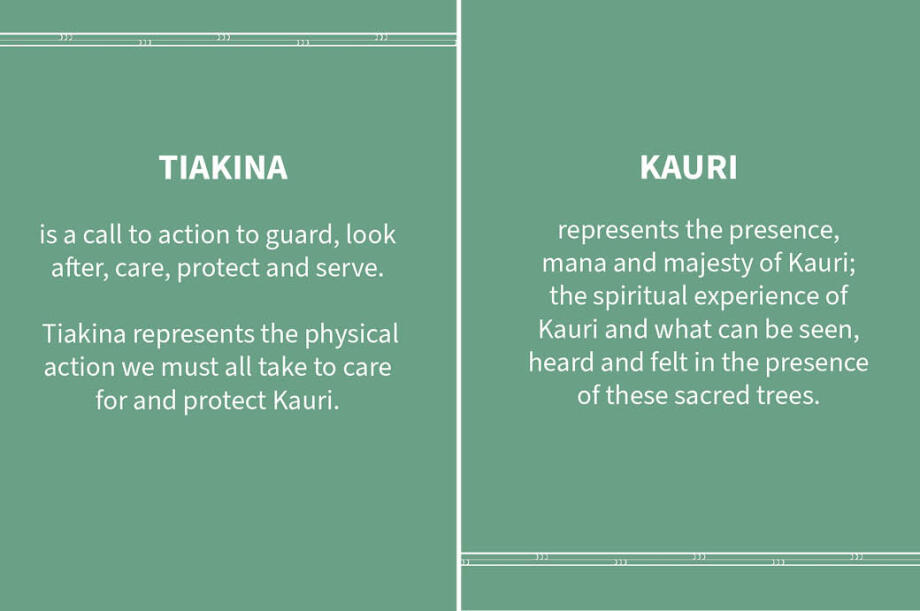
To celebrate Te Wiki te reo Māori, we shared more about our name, Tiakina Kauri on our Facebook and Instagram pages. This example of nuka reo consists of two concepts, both the physical act of protecting Kauri and the awe of standing with these taonga.
Tiakina is a call to action to guard, look after, care, protect and serve. Tiakina represents the physical action we must all take to care for and protect Kauri.
Kauri represents the presence, mana and majesty of Kauri; the spiritual experience of Kauri and what can be seen, heard and felt in the presence of these sacred trees.
Have you noticed we don’t say kauri dieback much anymore? ‘Dieback’ is being phased out of use after advice from mana whenua as the word has a negative impact on the wellbeing of Kauri and focuses on sickness rather than on keeping Kauri healthy. Instead, our language and name reflect Kauri ora (health) and what we can all do to protect these rākau rangatira.
You can hear Ngātiwai Kauri Ora rangers speak more about this change in language in this interview with Te Hiku Media about their mahi in Kauri protection.
MPI is asking people to be alert following three confirmed detections of H5 bird flu in wild birds in New Zealand.
Be alert and use good habits to limit the impact of bird flu.
Everything you need to know is online at mpi.govt.nz/bird-flu
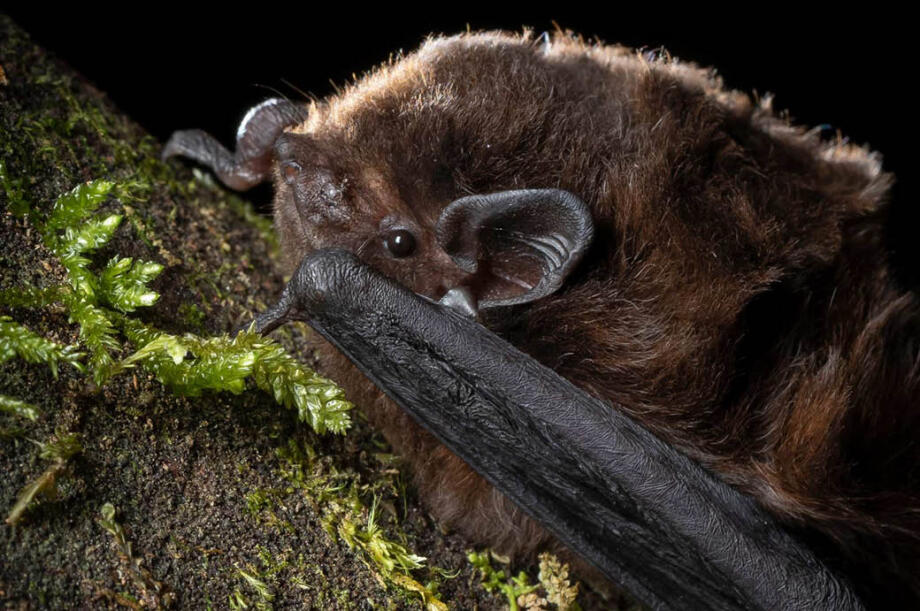
As we work together to protect Kauri, we are also protecting the species that call them home. Over their full life of 500–2,000 years, these trees become a kāinga (home) and a habitat to a variety of special animals, plants and fungi.
Pekapeka-tou-roa are one of two endemic land mammal species in Aotearoa New Zealand (the other being pekapeka-tou-poto | short-tailed bat). They are found throughout the country in forested areas (including the Waitākere Ranges). As Kauri age, cavities form in the trees which provide roots for these endangered animals. Even dead trees with hollows and cavities are still valuable for wildlife. Bats rest by day and breed in cavities in old-aged trees. They move to a new roost tree regularly but may return later.
The conservation status of pekapeka-tou-roa is ‘Threatened – Nationally Critical,’ which means they are severely threatened and facing an immediate high risk of extinction. Populations are declining due to loss of tree habitat, competition with introduced species and predation. You can protect bats in your rohe (area) by protecting native forests in your area, including by trapping introduced predators. This will help other species as well as bats.